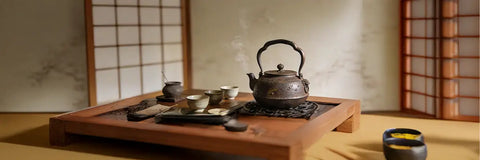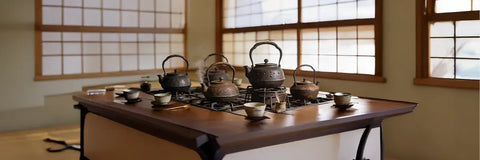
Der beste tetsubin ist ein handgefertigter japanischer Gusseisenkessel mit einer rohen, unbeschichteten Innenseite, der speziell zum Kochen von Wasser und zur Verbesserung seines Charakters für die Teezubereitung entwickelt wurde.
Die meisten Menschen, die nach einem tetsubin suchen, stellen schnell fest, wie schwierig es ist, ein Original von einer massenproduzierten Importware zu unterscheiden, die zwar das Aussehen kopiert, aber nicht die Substanz besitzt.
Ein authentischer tetsubin ist ein Wasserkocher aus unbeschichtetem Gusseisen. Die blanke Innenseite ist kein Mangel, sondern beabsichtigt. Beim Kochen von Wasser in rohem Eisen werden Spuren von Eisen(II)-Ionen freigesetzt, die nach Ansicht vieler Teetrinker das Wasser weicher machen und so die Teezubereitung erleichtern.
Die Unterschiede in der Eisenqualität, dem Gussverfahren und der Oberflächenbehandlung sind nicht rein kosmetischer Natur. Sie bestimmen die Leistung des Kessels, seine Lebensdauer und ob sich seine Eigenschaften mit der Zeit verbessern oder durch den Gebrauch verschlechtern.
Dieser Artikel behandelt die Unterschiede zwischen einem hochwertigen und einem minderwertigen tetsubin , was handgefertigte Konstruktion in der Praxis bedeutet und worauf Sie genau achten sollten, bevor Sie tetsubin für Ihr Tee-Set kaufen.
Die besten Tetsubin : Worauf Sie bei einem authentischen japanischen Kessel achten sollten

Für die tägliche tetsubin eignet sich am besten ein handgefertigter Gusseisenkessel mit unbehandeltem Innenraum und ausreichendem Fassungsvermögen für mehrere Aufgüsse, ohne dabei zu schwer zu sein. Authentische japanische tetsubin zeichnen sich durch ein ausgewogenes Verhältnis von Wärmespeicherung, Eisenqualität, Ausgießkontrolle und Langlebigkeit aus, anstatt sich allein auf die Dekoration zu konzentrieren.
Der Yokode-Stil mit seitlichem Griff anstelle eines Bügelgriffs ist in Japan für die Verwendung auf dem Herd beliebt, da er die Hand weit genug von der Hitzequelle entfernt hält. Für diejenigen, die einen tetsubin ausschließlich zum Vorkochen von Wasser vor dem Einfüllen in einen kyusu oder ein anderes Braugefäß verwenden, bleibt der Bügelgriff Standard.
Die Wahl des Fassungsvermögens ist wichtiger, als die meisten Käufer annehmen. Ein 0,6-Liter-Modell heizt schnell auf, muss aber für mehr als eine einzelne Session nachgefüllt werden. Ein 2-Liter-Modell bietet mehr Flexibilität, benötigt jedoch länger zum Erreichen der gewünschten Temperatur und ist im vollen Zustand deutlich schwerer.
Die besten Tetsubin werden aus rohem Gusseisen und in Handarbeit gefertigt.
Was unterscheidet ein authentisches japanisches Tetsubin von anderen?
Der Begriff „authentische japanische tetsubin bezeichnet speziell in der Präfektur Iwate hergestellte Eisenkessel, der Heimat von Nambu Tekki, einer Gusseisentradition mit über 400-jähriger ununterbrochener Praxis. Nambu Tekki wurde 1975 offiziell als traditionelles japanisches Handwerk anerkannt, und die Produktion in der Region unterliegt gesetzlich geschützten Standards.
Ein außerhalb von Iwate hergestellter Kessel mag zwar aus Gusseisen sein, ist aber kein echter Nambu tetsubin . Die besten tetsubin stammen in der Regel aus Werkstätten mit einer langen, nachweisbaren Verbindung zur traditionellen Nambu-Tekki-Herstellung.
Handgegossene und veredelungstechnische Verfahren
Die authentische Herstellung umfasst etwa 65 einzelne Arbeitsschritte, die größtenteils von Hand ausgeführt werden. Der Prozess beginnt damit, dass ein Handwerker eine Sandform von Grund auf neu anfertigt – eine Technik namens Yakigata, die jedes Stück einzigartig macht. Sobald das flüssige Eisen gegossen und abgekühlt ist, wird die Form zerbrochen und entsorgt. Daher gleicht kein Kessel der anderen in seiner Oberflächenstruktur.
Diese leichte Abweichung im Arare-Muster ist eines der deutlichsten Merkmale einer authentischen, handgefertigten tetsubin Teekanne. Die Veredelung erfolgt durch das Auftragen von Urushi-Lack oder Oxidationsverfahren auf die Außenseite. Dadurch bildet sich eine Schutzschicht, deren Farbe und Textur sich im Laufe der Jahre vertiefen. Ein echter Kessel gewinnt mit dem Alter an Schönheit. Ein billiger rostet einfach.
Eisenqualität und Innenausbau
Das Innere einer echten tetsubin besteht aus rohem, unbeschichtetem Gusseisen. Daran gibt es keinen Zweifel. Eine emaillierte Innenseite bedeutet, dass Sie eine Tetsu kyusu in Händen halten – eine gusseiserne Teekanne, die ausschließlich zum Aufbrühen von Tee und nicht zum Erhitzen bestimmt ist. Stellt man eine Tetsu kyusu auf einen Herd, reißt und splittert die Emaille, oft irreparabel.
Authentische Nambu-Teekessel werden aus hochreinem Roheisen hergestellt, das von etablierten regionalen Lieferanten bezogen wird. Die Dichte und Konsistenz des Gussmaterials beeinflussen, wie gleichmäßig der Kessel erhitzt und wie gut er die Temperatur hält. Minderwertiges Eisen, das bei nicht-japanischen Alternativen häufig vorkommt, führt oft zu dünneren Wänden und ungleichmäßiger Wärmeverteilung. Wenn Sie noch zwischen verschiedenen Gusseisen-Modellen schwanken, bietet Ihnen dieser Ratgeber alle wichtigen Informationen. 👉 Kyusu Tetsubin : Wissenswertes über die gusseiserne Teekanne
Handgemachtes Tetsubin und warum Handwerkskunst wichtig ist
Um ein vollwertiger Nambu-Eisenwarenhandwerker zu werden, sind mindestens 15 Jahre Ausbildung erforderlich. Dieser lange Zeitraum spiegelt die hohen technischen Anforderungen des Berufs wider; Präzision beim Formenbau, Kontrolle beim Gießen und gleichbleibende Oberflächenbearbeitung erfordern Fähigkeiten, die sich nicht in einer kürzeren Lehrzeit vermitteln lassen.
Renommierte Hersteller wie Iwachu und Oigen, beide in Morioka ansässig, führen diese Tradition auf unterschiedliche Weise fort. Iwachu bietet handgefertigte tetsubin in einer breiten Stilpalette an, von tief verwurzelten traditionellen Modellen bis hin zu Kooperationen mit zeitgenössischen Designern. Oigen hingegen bevorzugt schlichtere, funktionale Formen. Beide sind anerkannte Hersteller von Nambu-Tetsubin.
Das praktische Ergebnis dieser Handwerkskunst ist ein Wasserkocher, der stabil und wärmebeständig ist und bei richtiger tetsubin von Anfang an jahrzehntelang halten kann. Viele tetsubin in japanischen Haushalten werden über Generationen weitergegeben. Eine solche Langlebigkeit erreicht man nicht mit einem Wasserkocher, der in wenigen Stunden in einer Fabrik gepresst wurde.
Wie ein hochwertiger Tetsubin Wasser und Brühvorgang verändert

Wasser, das in einem rohen Eisen tetsubin gekocht wird, nimmt während des Kochvorgangs Spuren von Eisen(II)-Ionen (Fe²⁺) auf. Dies ist keine gesundheitsbezogene Aussage, sondern eine messbare chemische Reaktion. Das freigesetzte Eisen reagiert mit Calcium- und Magnesiumionen im Leitungswasser, wodurch dessen Mineralprofil weicher wird und die oft unangenehme Schärfe des Grüntee-Aromas abgemildert wird.
Bei Teesorten wie gyokuro und sencha , bei denen die Wasserqualität einen direkten und spürbaren Einfluss auf Süße und Umami hat, ist dieser mildernde Effekt von Bedeutung. Aus diesem Grund halten erfahrene Teetrinker einen hochwertigen Eisenkessel für die beste tetsubin zur Zubereitung von erstklassigem japanischem Grüntee.
Dank der Dichte des Gusseisens hält der Wasserkocher die Wärme besonders gut, sodass Ihr Wasser zwischen Kochen und Ausgießen länger die richtige Temperatur behält. Bereit, Ihren Wasserkocher richtig zu benutzen? 👉 So verwenden Sie einen Tetsubin : Eine Schritt-für-Schritt-Anleitung
Häufige Anzeichen für ein Tetsubin von geringer Qualität
Der Markt ist überschwemmt mit gusseisernen Kesseln, die in ihren Angeboten die Bezeichnung tetsubin verwenden, ohne die Standards echter Nambu-Produktion zu erfüllen. Am zuverlässigsten erkennt man sie an der Innenseite. Eine glänzende, dunkle, glasartige Oberfläche bedeutet, dass der Kessel emailliert ist; das ist ein „Tetsu kyusu , und er darf niemals auf eine Wärmequelle gestellt werden.
Gleichmäßige Unebenheiten sind ein weiteres Warnsignal. Bei einem echten handgefertigten Stück variieren die Erhebungen auf der Oberfläche leicht, da jede Form einzeln hergestellt wird. Ein perfekt gleichmäßiges, maschinell geprägtes Muster deutet in der Regel auf Massenproduktion außerhalb Japans hin.
Auch das Gewicht gibt Aufschluss. Echtes Gusseisen ist für seine Größe schwer. Ein Kessel, der sich für sein Volumen überraschend leicht anfühlt, ist wahrscheinlich aus dünnerem Eisen oder einer Eisenlegierung gefertigt, die nicht die gleichen Eigenschaften aufweist und nicht so lange hält. Ungewöhnlich niedrige Preise, alles unter etwa 8.000 bis 10.000 Yen (rund 55 bis 70 US-Dollar) für ein Stück, das als tetsubin beworben wird, sollten Fragen nach Herkunft und Herstellungsmethode aufwerfen.
Einen Tetsubin kaufen, der zu Ihrer Teeroutine passt
Bevor Sie tetsubin kaufen, sollten Sie sich überlegen, wofür Sie ihn verwenden möchten. Wenn Sie Wasser direkt auf einer Gasflamme oder einem Induktionskochfeld kochen wollen, benötigen Sie einen echten tetsubin mit rohem Eisenkern. Wenn Sie Tee direkt im Gefäß aufbrühen möchten, hilft Ihnen das Verständnis des Unterschieds zwischen tetsubin und kyusu , den richtigen Tetsu kyusu auszuwählen. Dieser hat einen emaillierten Innenraum und einen Teefilter, der speziell für die Zubereitung von Tee und nicht zum Erhitzen entwickelt wurde.
Für alle, die sich noch nicht so gut mit japanischem Teegeschirr auskennen, ist die Kombination eines tetsubin mit einem hochwertigen kyusu die traditionelle Vorgehensweise. Ein komplettes tetsubin -Teeservice ist eine praktische Möglichkeit, alles Notwendige von Anfang an griffbereit zu haben.
Die beste tetsubin Teekanne für die meisten Teetrinker stammt direkt aus Japan und wurde von einem Hersteller mit nachweislicher Nambu-Tekki-Tradition gefertigt. Sie zeichnet sich durch ein klar gekennzeichnetes Roheisen-Innenleben und ein Gewicht aus, das auf echtes Gusseisen hindeutet. Die japanische Teegeschirr-Kollektion von Nio Teas umfasst Stücke, die genau nach diesen Standards ausgewählt wurden und somit eine zuverlässige Basis für alle bieten, die sich eine hochwertige Teeausstattung zusammenstellen möchten.
Wenn Sie die passende Tonteekanne für Ihre tetsubin suchen, ist die rote Japanische Ton-Teekanne ein guter Ausgangspunkt.